
Globally, CEOs act on the critical importance of building innovation into the organizational DNA by incentivizing talent to take risks and spreading innovation skills throughout the enterprise.
European CEOs are stressing incremental innovation for the short-term. They recognize the need to link talent, customers, and outside alliances to drive innovation in their organizations. CEOs in Europe realize that if they do not have a skilled and engaged workforce, they will struggle to be innovative.
In mature economies, we expect to see further moderate economic growth within the next few years. Companies which increase turnover and gains have mastered the balance between reducing costs and specific investment in innovations, profitably expanding their business in the long run.
Innovation ultimately creates higher customer value and contributes to increasing returns for the company.
Based on current insight, gained from applied research and practical experience, we focus on examining a company’s culture of innovation – the most important factor to success!

The focus lies on three product service packages:
At this point we benefit from our knowledge on the topic of Human Capital Management, which is fundamental for the culture of innovation. Particularly noteworthy are the following (german) posts in our Blog:

What are the capabilities of HYBRID?
Due to falling infections and increasing vaccination numbers, the home office requirement is expiring in many places. How do you return to the office? Which forms of work seem sensible? What effects does this have [...]

Eiopa guidelines for dealing with AI
Following BaFin's policy paper, the European insurance supervisory authority Eiopa has also published guidelines for dealing with artificial intelligence (AI). AI applications help to process customer inquiries and claims more quickly. But insurers must ensure [...]
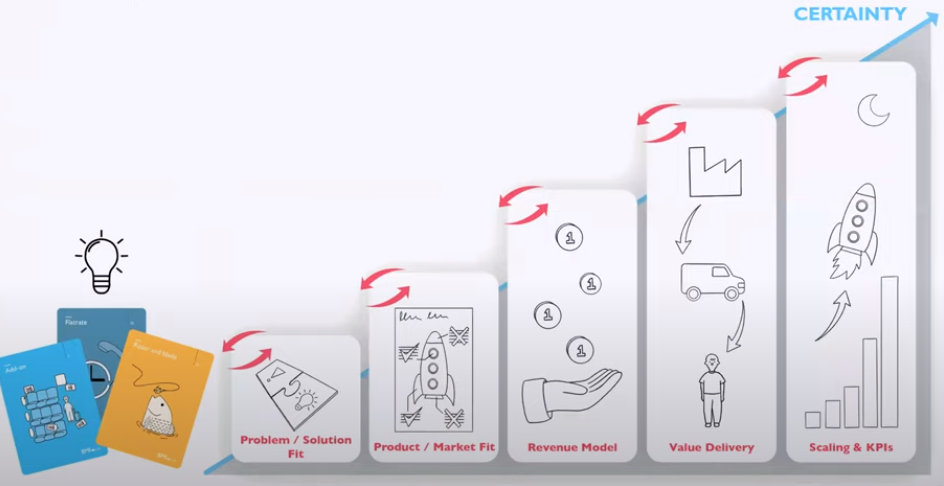
The 5 steps for implementing digital business models
About a year ago the BMI Lab posted a very interesting blog post. We would like to reproduce this in excerpts below. A business model consists of four dimensions: (WHO) is the target customer and [...]



End-to-end automation using Actbots
For years, insurers have worked on improving customer experiences and on the necessary sales and marketing channels. Derived from this, the internal provision of services is also “available”. […]
Central statements on upskilling and reskilling
For a long time, reskilling and upskilling were mainly used in Anglo-Saxon corporate cultures and tech circles. In the past 18 months or so, they became common. Various specialist magazines dealt with this in detail [...]