
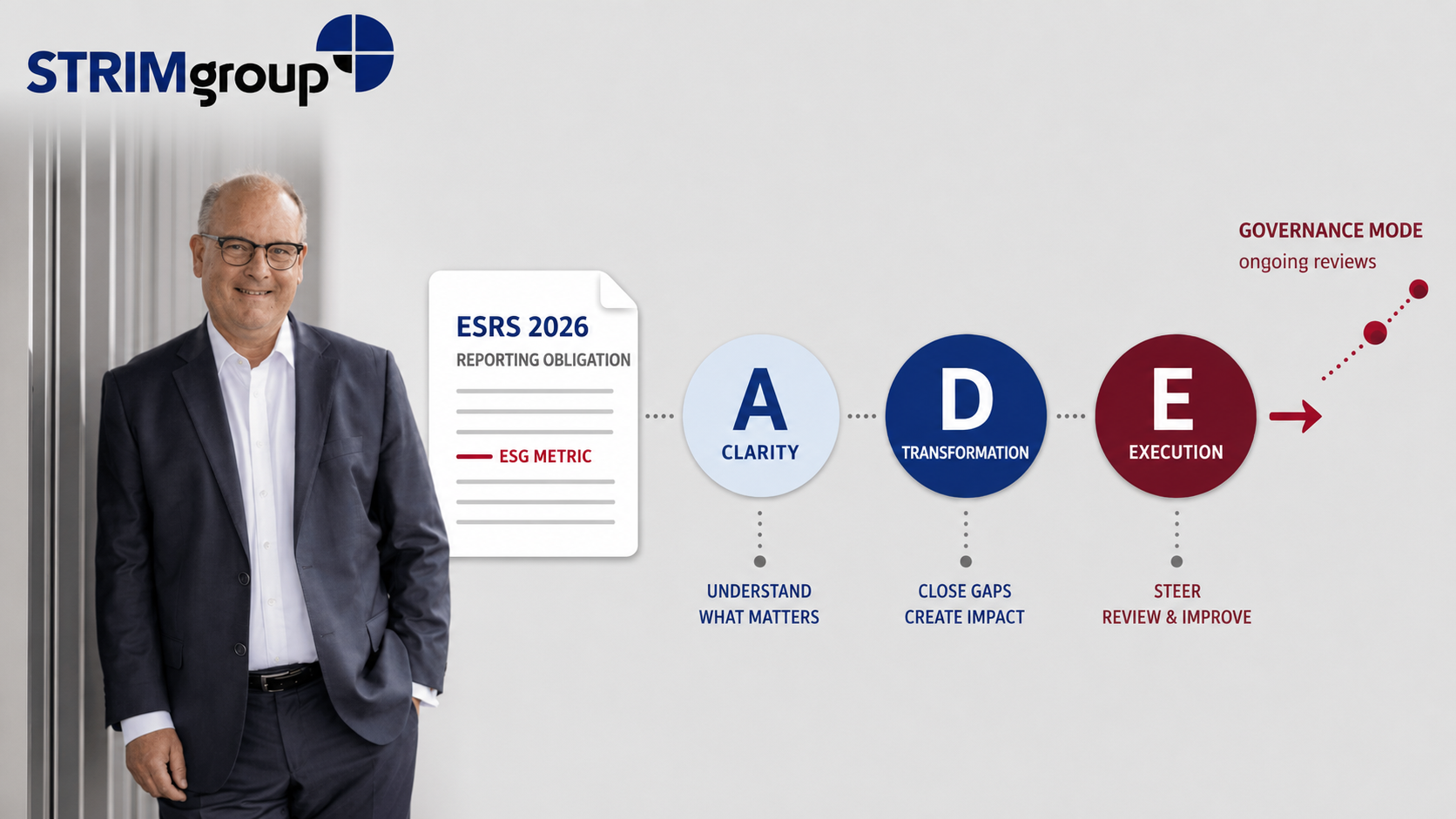
Many companies see ESRS 2026 as a major relief. At first glance, that view makes sense. Companies may report fewer data points. They also gain more time, while the thresholds increase. However, this view is too narrow.
The main question has changed. It is no longer about how much a company reports. Instead, it is about what the company does with the data. Therefore, ESRS 2026 should support real decisions. As a result, reporting can create business value.
This shift matters. Ultimately, it will decide whether ESRS 2026 remains a duty or becomes a tool for better management.
ESRS 2026: What Changes and What Remains
First, let us look at the timeline.
After the EU Commission presented its Omnibus package, EFRAG worked on the new ESRS text. Then, the new rules entered into force on 3 July 2026. Therefore, no separate national law is needed.
From 2027, ESRS 2026 will become mandatory. However, new companies in scope must meet two limits. They must have more than 1,000 employees. In addition, they must have more than €450 million in revenue.
For 2026, companies also have a choice. First, they may use ESRS 2023. Second, they may use the new ESRS 2026. Alternatively, they may choose an interim approach with selected relief measures. However, companies must explain this choice in the report. As a result, the decision sends a clear signal to investors.
Double materiality remains mandatory. Nevertheless, some rules are stricter. For example, climate targets must match real emissions. In addition, only verified social incidents may be reported.
In short, companies may report fewer data points. At the same time, they must provide clearer evidence.
The STRIM Logic: Clarity → Transformation → Execution
This is where the STRIM logic comes in.
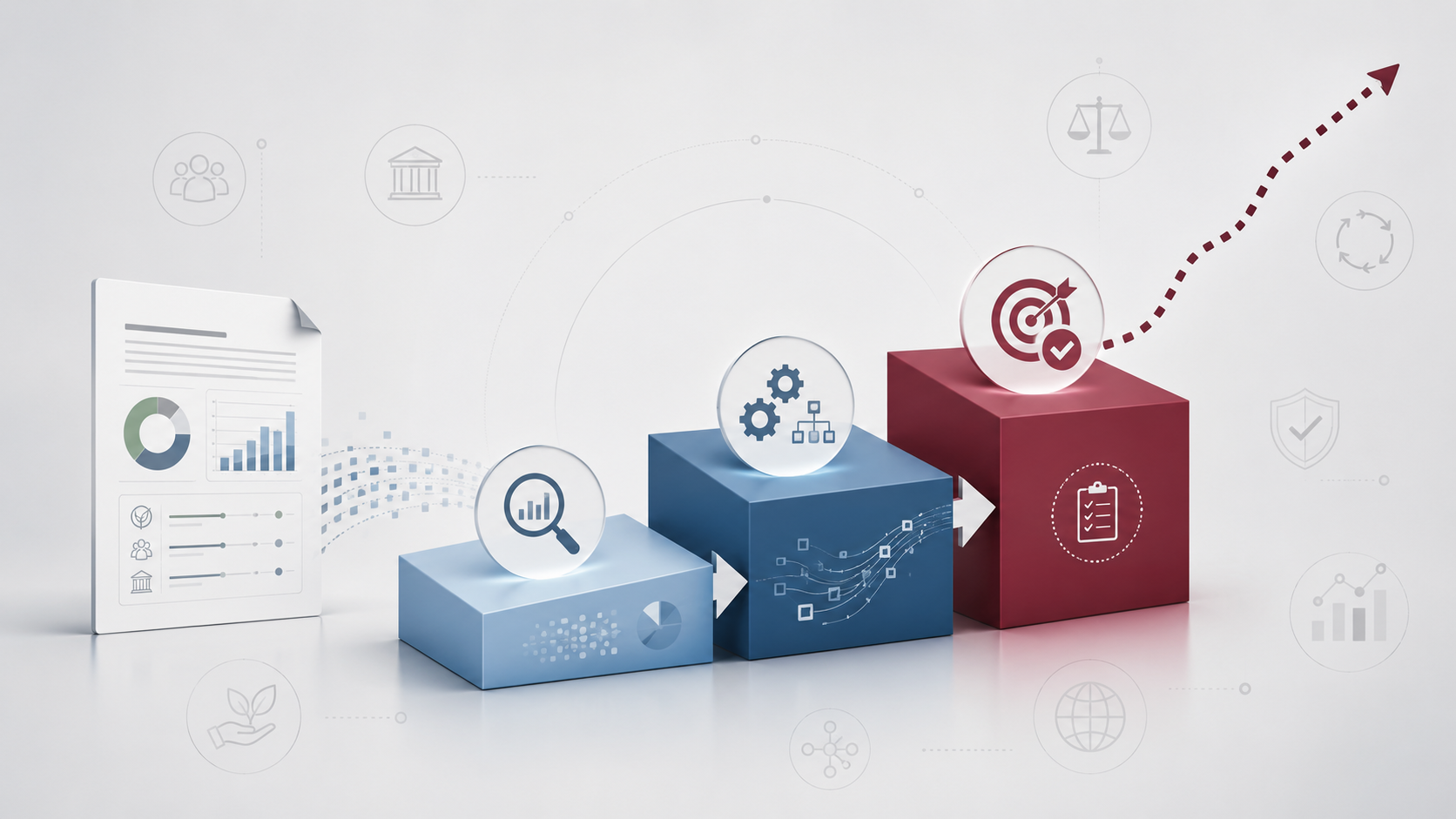
It does not replace ESRS compliance. Instead, it connects the reporting duty with business management.
Transformation Readiness Scan
First, the Transformation Readiness Scan creates clarity. Within two to three weeks, it shows the main lever. For example, the lever may lie in ESG, governance, or data. Therefore, companies gain a clear view before they invest. As a result, they can avoid large projects with weak impact.
Resilient Value Transformation
Next, the company turns insight into a plan. A single action is often not enough. This is especially true when performance pressure, data gaps, and ESG duties come together. Therefore, Resilient Value Transformation includes ESG in the main diagnosis. Then, it links ESG with business needs and key gaps. As a result, the company receives a clear plan for the next 12 to 24 months.
Strategy-to-Execution Office
Finally, the company needs a steady management rhythm. The Strategy-to-Execution Office provides this rhythm. It sets clear reviews. In addition, it defines roles and rules. It also supports active steering. Therefore, execution does not stop after one project. Instead, progress becomes part of daily management. Overall, this chain creates a clear path. First comes clarity. Next comes transformation. Finally comes execution. As a result, companies avoid isolated projects. In addition, they reduce pure compliance work with no real effect.
Practical Example: The Logic in Action
An international trading company had to prepare its first ESRS report. Its process followed the same logic.
First, the company spoke with key stakeholders. In addition, it carried out a double materiality assessment. As a result, the company found its most important topics. This step created clarity, in line with the Transformation Readiness Scan.
Next, the company reviewed its data gaps. Then, it built a more stable data system. In addition, it defined clear performance indicators. Therefore, the company moved from clarity to transformation, in line with Resilient Value Transformation. Training also played a key role. For example, employees learned about new tasks and controls. In addition, they learned how to collect and check the data.
As a result, the report was ready on time. At the same time, the company made first gains in CO₂ and waste. Moreover, investors reacted in a positive way. Therefore, the company had a strong base for regular reviews. This was the first step towards Strategy-to-Execution. In other words, reporting became part of active steering.
Overall, the report alone did not create the value. Instead, the value came from the full chain of clarity, change, and control.
Three Perspectives, One Decision
ESRS 2026 affects several leaders. However, they all face the same choice.
The CEO View
First, the CEO asks a simple question. Will ESRS 2026 remain a duty? Or will it support a clear target and better decisions? Therefore, the CEO must link reporting with strategy.
The CFO View
For the CFO, control is the main issue. ESG data should link to cash, cost, and investment. Otherwise, the figures remain part of a report with little value. Therefore, the CFO needs clear links between ESG actions and financial results. As a result, ESG becomes part of business steering.
The CHRO and Sustainability View
For CHROs and sustainability leaders, maturity is key. First, they need clear roles. In addition, they need stable processes. Finally, they need strong proof. These points matter even more because assurance rules are becoming stricter. Therefore, governance must improve with the reporting process.
From ESRS Reporting to Active Business Steering
Overall, ESRS 2026 is more than a rule update.
The reform changes the main question. Companies should no longer ask only, “What must we report?” Instead, they should ask, “How can we use the data to run the business better?”
Fortunately, the first step does not need to be large. In many cases, a short and honest review is enough. First, it shows the current state. Next, it reveals the main gaps. Finally, it identifies the best areas for action.
This is exactly where the Transformation Readiness Scan starts.

Leave A Comment